Is It the Right Time to Move?
Maybe it started with the roof estimate. Or the winter you decided the snowblower was more work than the snow. Or a conversation at the kitchen table that began “If something happened to me…” and never quite got finished. Whatever brought you here, you’re asking the question almost every Village Cooperative member asked before you: is this the right time, or should we wait a few more years?
Here is the answer members and Sales Managers give, over and over: sooner than you think. Not because anyone is in a hurry to sell you a home. Because of how long the process takes, because the best choices go to the people who start early, and because the members who are happiest with their timing made the decision while they still had the health and the energy to make it well. The members who regret their timing almost always tell the same story. They waited for something to force the decision, and then had to sell a house, downsize, and move all at once.
If you’re already asking the question, that is usually the answer.
Want to see how members got there, and how to tell where you stand? Keep reading.
Where the question usually comes from
Almost nobody calls a Sales Manager certain they want to move. They call because they’ve been thinking about it and want to know what’s actually out there before they decide anything. That’s the right way to go about it, and it’s what the first conversation and the FREE Informational Seminar are for.
Something else comes up in those first conversations, often enough that every Sales Manager we talked to mentioned it. People say they’re too young. People in their late 60s say it, and so do people coming up on 80. Some add that they don’t want their friends to think they’ve moved into an old folks’ home. The number changes with the person. The worry doesn’t.
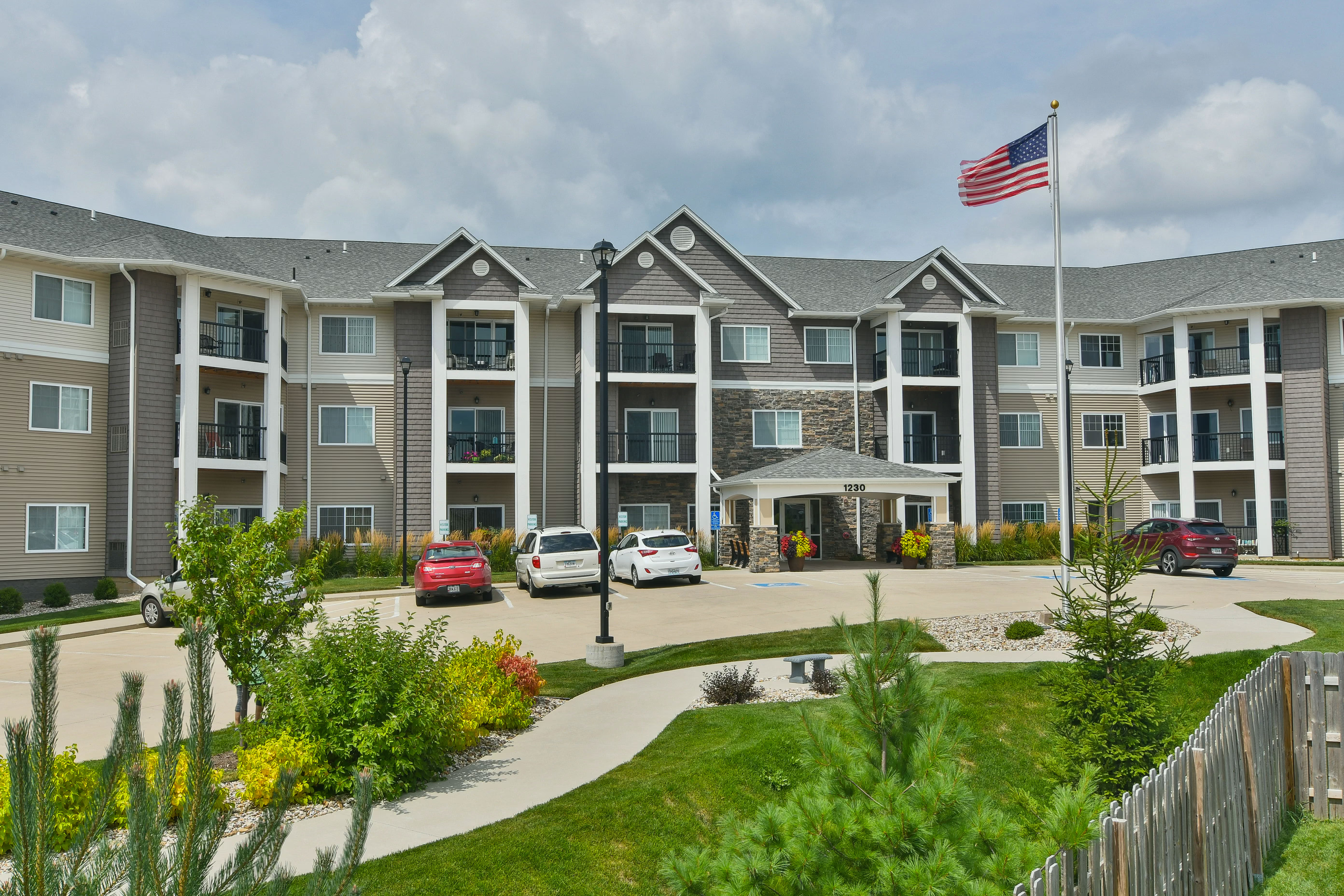
It’s worth being clear about what a Village Cooperative is and isn’t, because that worry usually comes from a picture of “senior housing” that doesn’t apply here. This is not assisted living. There is no care staff, no dining schedule, and no activities director. It is a community of active adults (55+ or 62+ depending on location) who own their homes together, elect their own board, and run the place themselves. Members drive, travel, work, volunteer, watch grandchildren, and keep whatever schedule they like. The ages in a single building usually span 20 years or more, and new members tell us again and again that the group turned out to be younger and more active than they pictured.
Everyone is within 10 years of our age. It’s fun to know that even people 10 years younger than we are are looking at this same situation … We just felt younger. —Member, Village Cooperative of Bismarck, North Dakota
Why members decided to move
We asked members, and the people who work alongside them, what finally tipped the decision. The answers sort into a handful of situations, and most people will see themselves in at least one. None of them is about age.
Setting up a spouse
For couples, this is the most common one. At some point one of them looks at the house, the stairs, and the yard and asks what would happen if the other had to handle it alone. Sales Managers call it getting your affairs in order, and they say it’s the number one reason couples move: they want the surviving spouse in a home that takes care of itself, and they’d rather make that decision together, now, than leave it to one of them later. Some couples arrive at the sales office with their minds already made up and ask when they can write the check.
My wife was worried that if something ever happened to me, she did not want to keep up a house. I love working in the yard, so I was kind of skeptical at first … But I started thinking: what if something did happen to me? It would all be up to [her], and that’s not fair. —Member, Village Cooperative of Erie, Colorado
Wanting to go do things
Other couples don’t have a health worry in mind at all. They’ve kept up a house for 30 years and would like to spend their time and money on something else: travel, a month near the grandkids, a hobby that got shelved during the working years. What they want is a home they can lock and leave for a week or a season, with someone to water the plants and bring in the mail, and a community to come home to. The cooperative was built for exactly this.
If I want to go away for two weeks, three weeks, a month, six months … I lock the door, talk to the resident manager, have someone water the flowers, and I’m gone. —Village Cooperative member, from our member stories video
A house that has become too much
For many members living on their own, the house makes the decision for them. First it’s the roof, then the siding, then the furnace, and every job means finding a contractor and hoping the price is honest. The house they raised a family in has turned into a liability they can’t keep ahead of. Renting doesn’t appeal, and neither does leaving the town where their friends and their church are. Members in this spot tell us the cooperative was the one option that let them stay in their community, in a home they own, with the work taken off their hands.
Getting the weekends back
One couple sat down before they decided and added up what their house was really costing them: the property taxes, the insurance, the furnace and air conditioner they’d replaced, the roof they’d done. The numbers said they would spend less each month at the cooperative, and that settled it. But when they describe the decision now, the money isn’t the first thing they mention.
No more cleaning the garage, no more leaves, no more lawnmower, no more snow, no more painting, no more nothing but enjoying life at its fullest. —Village Cooperative member, from our member stories video
What fills the time instead is up to them. Members describe coffee mornings, card games, potlucks, an exercise room down the hall, and the trips they kept putting off. Or none of it. The point was never a full calendar. It was having the choice.
Wanting something new
Not everyone is getting away from a problem. Some members simply liked the idea of a brand-new home: new appliances, finishes they picked themselves, nothing to repaint or replace, and neighbors moving in at the same time who were just as new to the place as they were. One couple told us the numbers made sense and the home being new was the clincher. The lifestyle turned out to be the bigger surprise.
We didn’t have to do anything but move in, decorate it the way we wanted to, and call it home. And it’s been fantastic since … There are so many things to do. —Village Cooperative member, from our member stories video
Why earlier is easier
You’ll notice none of those reasons involves a deadline. Timing still matters, for practical reasons, and we’d rather lay them out than hint at them.
A new community takes two to three years
Construction can’t begin until roughly 60 percent of the homes are sold and permitting is complete. In a market that’s new to cooperatives, reaching that point can take a year or more, and construction itself takes another 16 to 18 months. So the earliest members in a community can be two to three years from their first conversation to the day they move in. If you’d like to be settled in a new home within a few years, the looking needs to start now. Members will also tell you the wait feels longest once you’ve made up your mind.
That has been a little bit of a challenge, because I am ready to move, and we’re still keeping things in our house so that when we sell … it’ll still be staged. —Member, Village Cooperative of Bismarck, North Dakota
The best choices go to the people who start early
Floor plans, floor levels, and pricing all favor the first members in. Prices step up at set points during the project, and again once there’s a building you can walk through, because at that point the home is real and so is the move-in date. Finish selections work the same way. About a year before completion the contractors need final decisions, and after that the choices close and the remaining homes are finished by the design team. If picking your own cabinets, flooring, and countertops matters to you, and for members who have lived with the same kitchen for 40 years it usually does, you want to be in the project early.
Get involved early. Don’t wait. You’ve got [communities] that are just now in the development stage. You don’t have to put all the money down until the building’s actually starting to be built. But in the developing stage, you have more of a selection of what [home] you want. Then once you do decide … attend any and all meetings that you can. And make sure you realize that 99 percent of the people are downsizing, and the key word is “down.” —Member, Village Cooperative of Erie, Colorado
Downsizing takes about a year
Nearly everyone moving into a Village Cooperative is coming from a bigger house, often one they’ve lived in for 20, 30, or 40 years, and nearly everyone underestimates what’s in it. Members give the same advice: start a year ahead, take one room a month, find out early what your kids actually want (usually less than you’d guess), and use the downsizers, estate-sale services, and movers your Sales Manager can connect you with. The 16 to 18 months of construction turns out to be about the right amount of time for this. Members who dreaded the wait often say afterward that they needed every month of it.
Health changes
Most people who tell us they’ll think about it in three to five years are in good health today. That’s a good place to be, and nobody should be talked out of it. Maybe you’re one of them: fine, mostly, apart from a knee that has started to notice the basement stairs, or a shoulder that complains after an hour behind the snowblower. That isn’t a reason to move. It is worth paying attention to, though, because those are the jobs the house will keep handing you, and they don’t get lighter. Members who moved while they were well describe what they got instead: settling in on their own schedule, learning the neighbors’ names over coffee, and never thinking about the stairs or the shoveling again. If you do need help later on, in-home care can come to you at the cooperative just as it would in a house. The difference is that you’ll already be in a one-level home with nothing to maintain.
There’s usually only one in town
Village Cooperative typically builds one community in each area, and every existing community has a wait list, some of them years long. Once a building sells out, that’s it until a home comes back on the market. If you decide in five years that you’re ready, the home you want may not be there, and it won’t be at today’s pricing.
Signs it might be time
Most members we talked to recognized two or three of these in themselves before they made the call.
- You’ve talked about downsizing more than once and never acted on it.
- A big repair is coming that you’d rather not pay for or manage.
- You’ve started to think about the stairs, the yard, or the snow.
- One of you does most of the upkeep, and the other couldn’t take it over.
- You travel less than you’d like because the house needs looking after.
- You’d like your weekends back.
- You live in a house built for a family that has grown up and moved on.
If a few of these sound familiar, you don’t need to be sure of anything yet. A conversation with a Sales Manager doesn’t commit you to a thing.
When it isn’t the right time
We’d rather say this up front than have you find out at the share payment. There are situations where a new Village Cooperative community isn’t the right answer, or isn’t the right answer yet.
- You need daily help now. Village Cooperative is independent living, not assisted living. If you or your spouse need care today, this isn’t the right fit, and your Sales Manager will tell you so.
- You need to move this year. A community in development is one to three years from move-in. Ask your Sales Manager about existing Village Cooperative communities nearby and get on a wait list.
- Your health is already changing. If a two- or three-year timeline doesn’t fit your situation, say so. Your Sales Manager can tell you about communities with shorter waits and will be honest with you about fit.
- You’ve decided to stay in your house for several more years no matter what. That’s a reasonable choice, and it’s yours. Make it knowing what repairs are coming, how long the wait lists are, and that the next community in your area may not be built when you want it.
You don’t have to sell your house first
A lot of people assume they’d have to sell the house before they could do anything, and it keeps them from making the first call. They don’t. The first step is a Priority Reservation: a refundable $500 deposit that holds a home and a price while you decide. Most members then use a home equity line of credit to make their share payment, stay in their house through construction, and pay off the line when the house sells at move-in. Some sell early and rent until the building opens. One member told us that moving from a house to an apartment and then to the cooperative was the best thing he did, because by the final move he already knew what fit. Your Sales Manager has seen every version of this. The full process, from first call to move-in, is laid out in What Happens After You Contact Village Cooperative?
Telling your family
When you start telling people, expect some version of “You’re going to do what?” Cooperatives aren’t widely understood, and the people who love you will have opinions. Two things help. By the time you’ve been to a seminar and an Informational Handbook Meeting, you’ll know more about cooperative ownership than most of the people advising you. And your Sales Manager will talk with your children or your financial advisor directly, or bring them along on a tour. Members say the conversation goes best when you tell your family why you want this (security, no maintenance, community, neighbors your own age) and then show them the numbers.
One member’s son asked whether she would miss all the memories in the house he grew up in.
I’m taking all the memories with me. It’s just a house. —Village Cooperative member, from our member stories video
Six months after she moved, he told her that she hadn’t seemed unhappy before, but she seemed a lot happier now.
What members say afterward
When we ask members what they think of their decision, the most common answer is that they wish they had done it sooner. They don’t mean the house was a mistake, or that the years there didn’t count. They mean they can see now what the move gave them: more time, a secure home, neighbors down the hall, and no maintenance list waiting on the counter. We have not met a member who misses mowing the lawn.
[We decided that] in the long run, five, ten years from now, we’d rather move into a co-op now,
while we can. —Member, Village Cooperative of Erie, Colorado
The short version
- The right time is sooner than most people think, and while the decision is still yours to make.
- A new community takes two to three years from first conversation to move-in. Start looking when you start wondering.
- The earliest members get the best pricing, the widest choice of homes, and all of the finish selections.
- Downsizing takes about a year. Construction gives you that year.
- Health changes. Members who moved while they were well settled in on their own schedule.
- Village Cooperative typically builds one community per area, and existing communities have wait lists.
- You don’t have to sell your house first. The reservation is refundable, and most members finance the share while they stay in their house.
- Members who have done it say they wish they had done it sooner.
Your choice. Your time.
Nobody is going to tell you that you’re ready. What your local Sales Manager can do is answer every question you have, as many times as you need to ask, show you the homes and the numbers, and help you work out where you stand. Call, or join us at the next FREE Informational Seminar. The decision stays yours either way. The earlier you make it, the more years you have to enjoy it. It Feels Like Home. Because It Is.